Remote positioning
A mobile interface provides access to antenna position controls without directly adjusting the model by hand.
Telkomsel · MSIB Batch 7 · 2024
Remote antenna positioning, from a working prototype.
An ESP32-based prototype for adjusting sector antenna orientation through Blynk. It brings pan and tilt control to a mobile interface and explores how IoT can reduce manual positioning work.
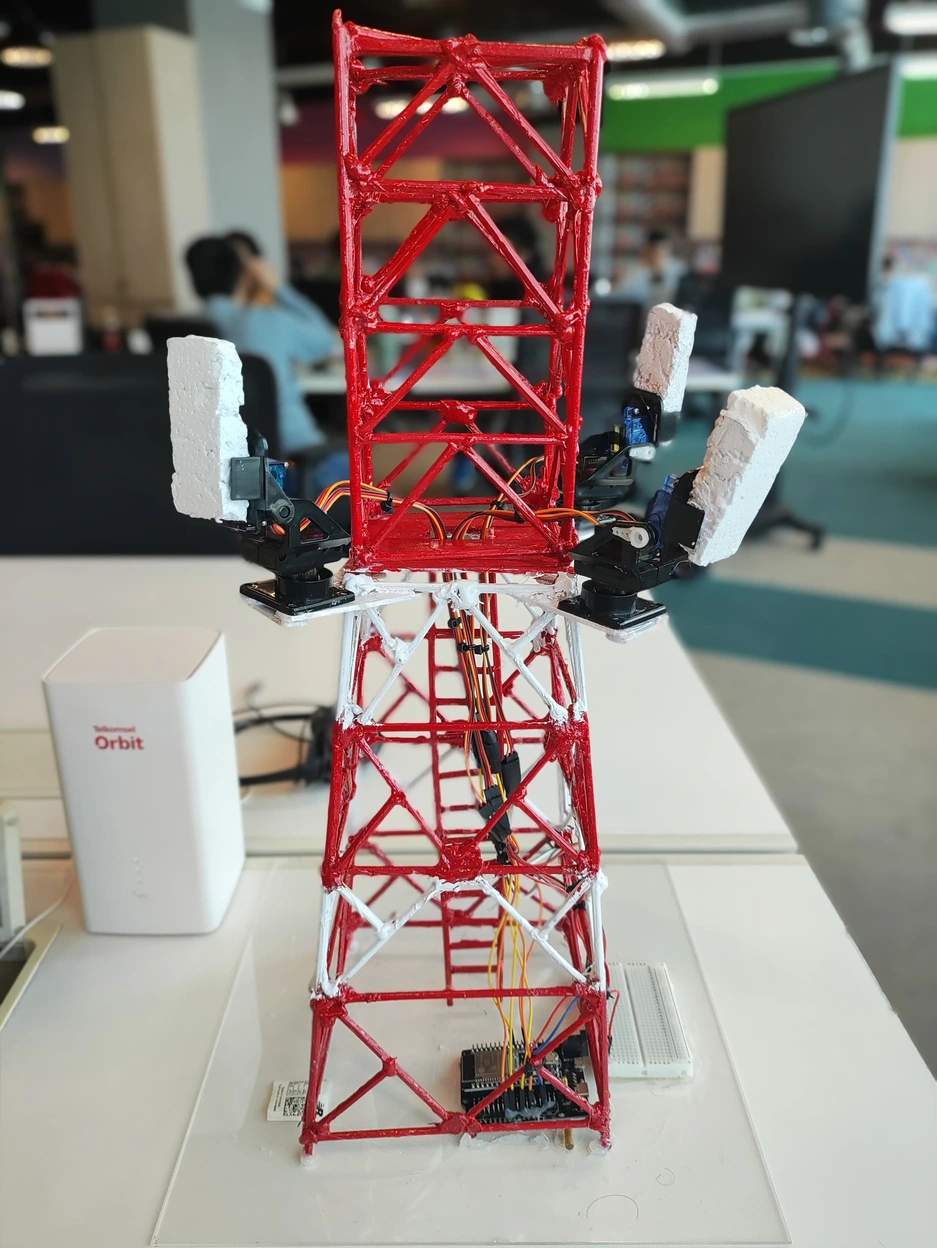
Sector antennas direct radio coverage toward a target area. Manual orientation changes require physical adjustment at the site, which adds time and field work.
This project explores remote positioning using a miniature tower, ESP32, servo actuation and Blynk. The goal is to make orientation changes accessible from a mobile interface before considering a full-scale industrial implementation.
A command travels from the operator to the antenna mechanism.
Operator enters a target position.
Connection carries the control command.
Controller translates the command into servo movement.
Actuators adjust each antenna sector.
The documented Blynk interface exposes six servo controls: one pan axis and one tilt axis for each of three sectors. It shows target angle inputs, current servo position text and input validation messages.
| Sector | Pan range | Tilt range |
|---|---|---|
| Sector 1 | 0–119° | 0–10° |
| Sector 2 | 120–239° | 0–10° |
| Sector 3 | 240–360° | 0–10° |
These are the ranges displayed in the Blynk screenshots, not measured positioning accuracy or actuator load ratings.
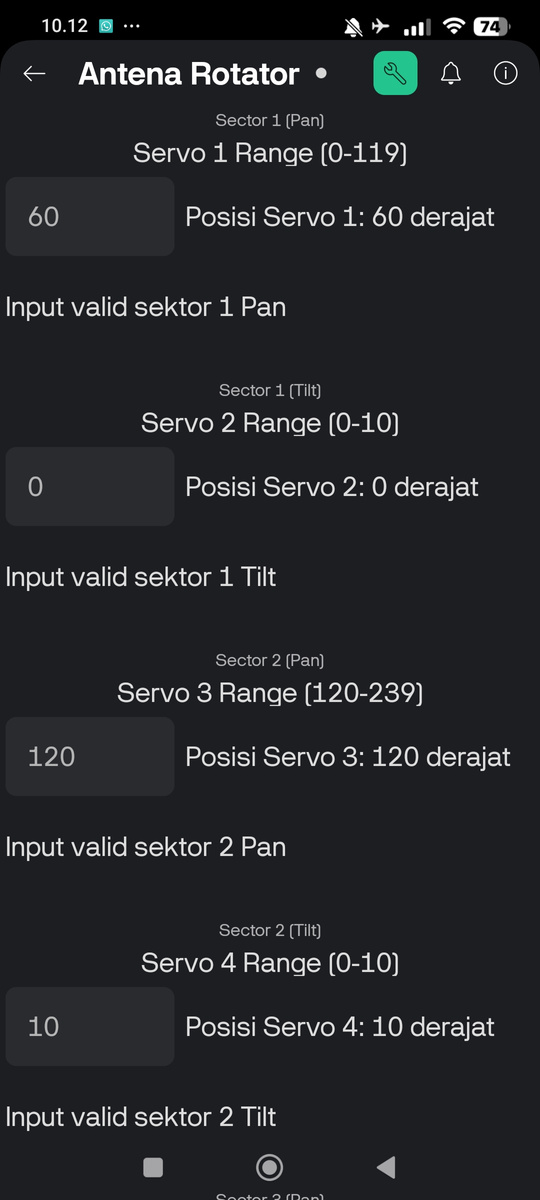
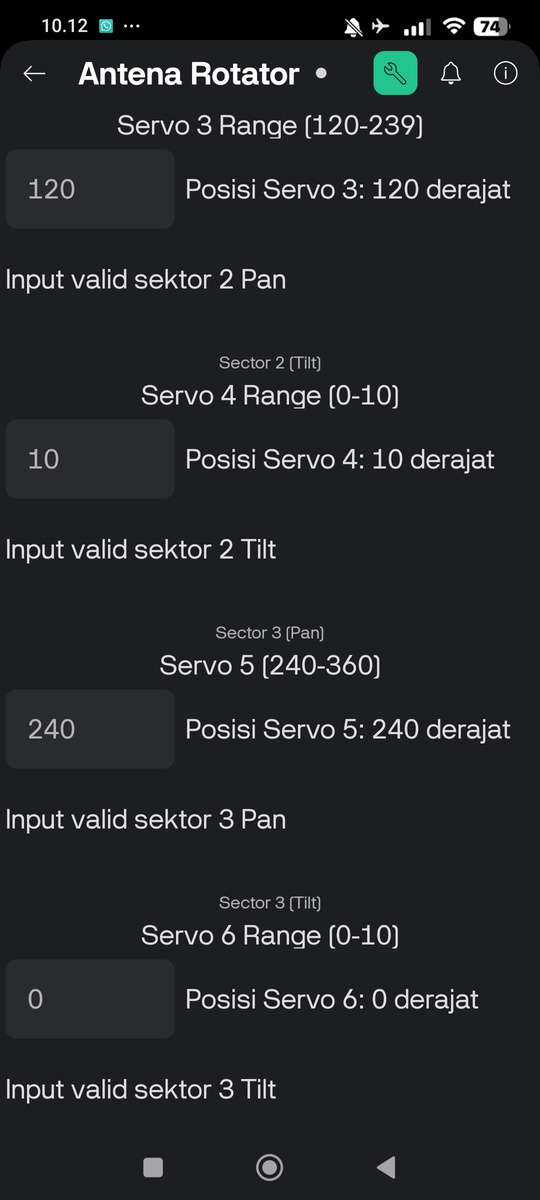
A mobile interface provides access to antenna position controls without directly adjusting the model by hand.
The report describes saving servo positions to maintain consistent orientation after a restart or power interruption.
Remote adjustment could reduce repeated site visits and make antenna orientation changes more flexible. The report does not provide measured time or cost savings.
The project compares two ways of setting antenna orientation. The benefits below describe the intended workflow, without claiming measured time or cost savings.
| Aspect | Manual system | ESP32-based IoT system |
|---|---|---|
| Position adjustment | Technician adjusts the antenna at the tower. | Operator sends a target angle through Blynk. |
| Field work | Each physical adjustment requires access to the antenna. | Remote commands can reduce repeated manual adjustments. |
| Position consistency | Orientation depends on physical setting and inspection. | Saved servo positions support restoration after a restart. |
| Monitoring | Position is checked at the installation. | The app displays servo position information and input validation. |
Small servos and a miniature tower do not establish capacity for full-size antennas. Industrial deployment needs stronger actuation and a redesigned rotation mechanism.
The prototype depends on stable power and Wi-Fi. Connectivity and control reliability need further validation for remote tower locations.
The documented components have not established protection against rain, wind or extreme temperatures. Weather protection and IoT security remain development needs.
The development material proposes replacing small servos with a stronger drive and a redesigned pan-tilt mechanism. The images below are equipment references from the presentation, not components installed on the current prototype.
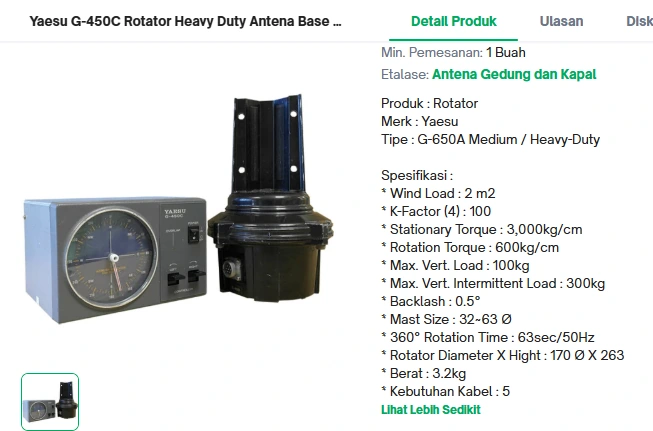
A dedicated rotator is an option for the horizontal axis. Mechanical mounting, bearings and load capacity must suit the antenna and wind load.
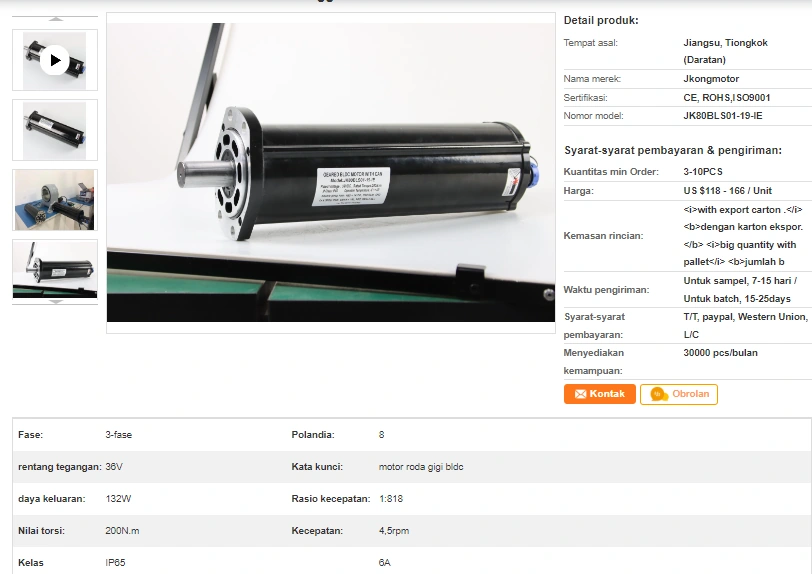
A geared motor offers another drive approach. Gear ratio, holding torque, position feedback and travel limits need to be specified and tested with the mechanism.
Redesign the pan-tilt assembly with a gearbox or rotary bearing. Test the complete assembly for antenna weight, wind forces and position stability before tower installation.
Evaluate weather-resistant enclosures and suitable water and dust protection. The material also proposes solar power for remote locations, subject to a power budget and storage design.
Evaluate SCADA or an industrial IoT platform for larger installations. Add authenticated access and encrypted communication, then assess alternative connectivity and field reliability.
Automatic traffic-based optimization is a future direction in the report and is not presented as a validated feature of this prototype.